On May 27, Beijing Time, Professor Zhang Muqing (co-corresponding author) and Chen Baoshan (co-author) from the School of Agriculture at Guangxi University (GXU) published a groundbreaking research paper titled "Genetic architecture of sugarcane traits in a polyploid genomics framework" online in Nature. This study was led by Zhang Xingtan's team from the Shenzhen Institute of Agricultural Genomics, Chinese Academy of Agricultural Sciences, in collaboration with over 10 top research teams, including Guangxi University, Fujian Agriculture and Forestry University, the Chinese Academy of Tropical Agricultural Sciences, and the Yunnan Academy of Agricultural Sciences.
In the plant world, the genetic makeup of sugarcane is widely regarded as one of the most complex and challenging to decipher.
Modern cultivated sugarcane is a typical allopolyploid, characterized by numerous chromosomes, a high proportion of highly repetitive sequences, and the presence of aneuploidy. Facing this global challenge, the research team developed an algorithm system with fully independent intellectual property rights tailored to polyploid genetic characteristics. The C-Phasing algorithm solved the problem of precise separation of homologous chromosomes against a background of ultra-high chromosome numbers, achieving precise assembly at the whole-chromosome level; the KMERIA analysis tool was designed for the complex gene dosage effects of polyploids, improving the accuracy of genome-wide association studies (GWAS); the Allele-Express framework enables precise quantification of allele-specific expression across different sub-genomes. This set of algorithms not only provides a physical map for sugarcane research but also establishes a brand-new technical paradigm for genomic research on similarly complex polyploid crops such as potatoes, wheat, and strawberries worldwide, serving as an "all-purpose navigator" for polyploid genomics research.
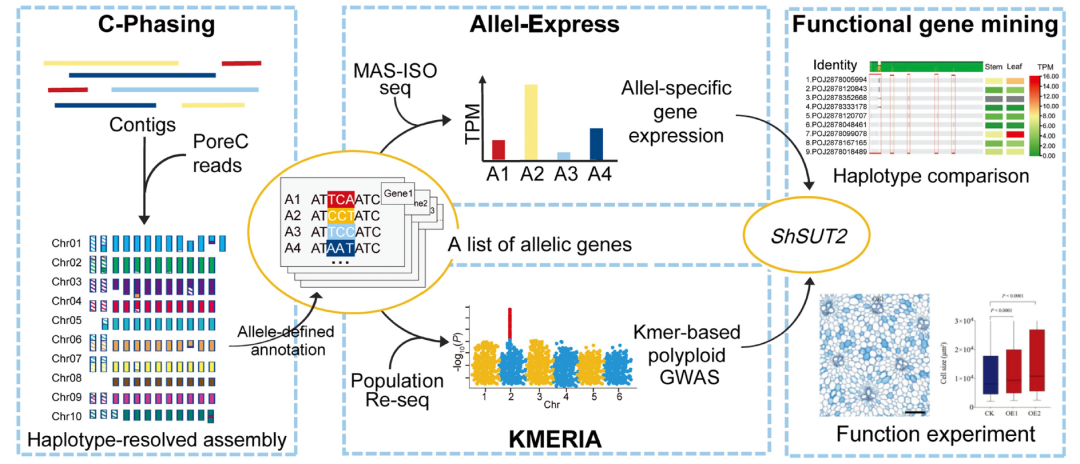
Figure 1. Integrated analysis framework for polyploid genomics
To thoroughly understand how sugarcane becomes sweet, the team collected 981 core germplasm resources from 19 major sugarcane production regions worldwide, covering Saccharum officinarum, Saccharum spontaneum, and modern hybrids, and completed the acquisition of ultra-large-scale re-sequencing data amounting to 125.58 Tb. Through deep mining of massive data, the research team accurately reconstructed three key stages of sugarcane evolution: natural evolution, early artificial domestication, and hybrid improvement in modern breeding. The study systematically revealed how, at these historical nodes, the sugarcane genome evolved step-by-step into the crop with the highest biological yield and strongest sugar accumulation capacity today through selective sweeps between subgenomes and the accumulation of favorable variations. The completion of this evolutionary map provides the most authoritative underlying genetic data for the conservation and utilization of global sugarcane germplasm resources.
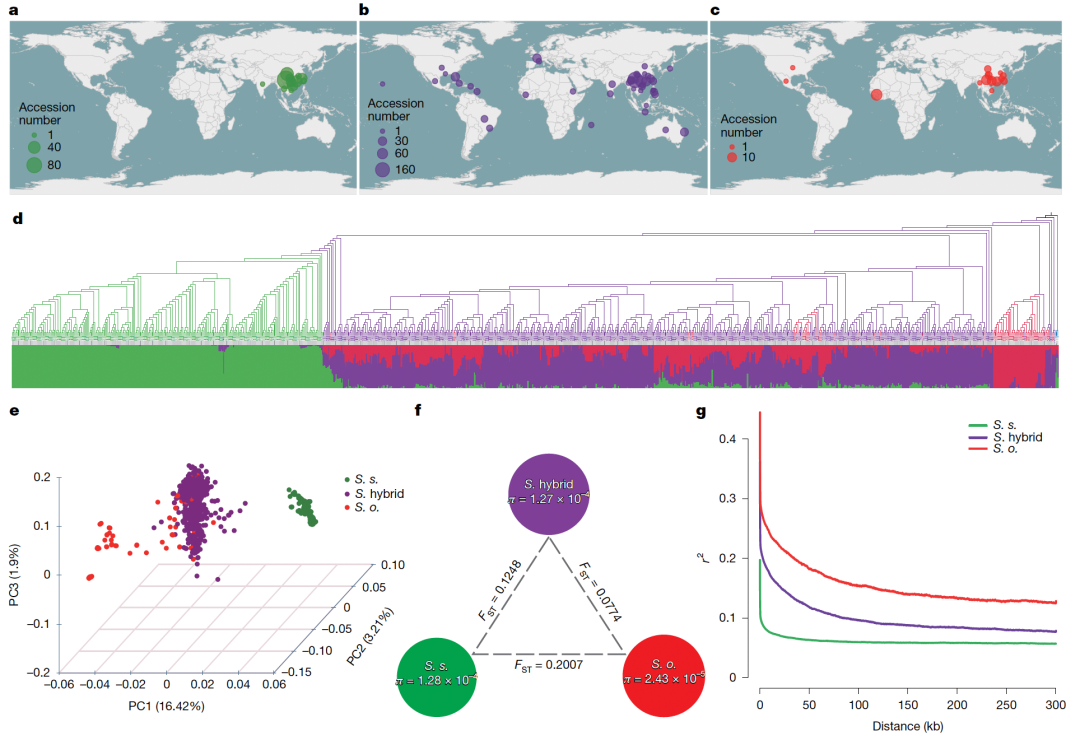
Figure 2. Analysis of genetic diversity and population structure
Traditional sugarcane research mostly focuses on photosynthesis or enzymatic reactions, but the research team proposed a revolutionary perspective: the "storage capacity theory." The study found that the key reason sugarcane can store more sugar lies in the physical volume of the parenchyma cells in its stalks used for sugar storage. Using the self-developed KMERIA tool, the team precisely located the core regulatory gene—the sucrose transporter gene SUT2—from tens of thousands of genes. Experiments confirmed that SUT2 exhibits a clear "dosage advantage" in superior high-sugar varieties; it is not only responsible for efficiently transporting sucrose into vacuoles but also acts like a "power source," driving the physiological expansion of sugar-storing cells and increasing cell volume. This discovery achieves a cross-scale logical closure from molecular signals to cellular structure, and finally to yield phenotypes, profoundly answering the basic scientific question of "why sugarcane is so sweet."
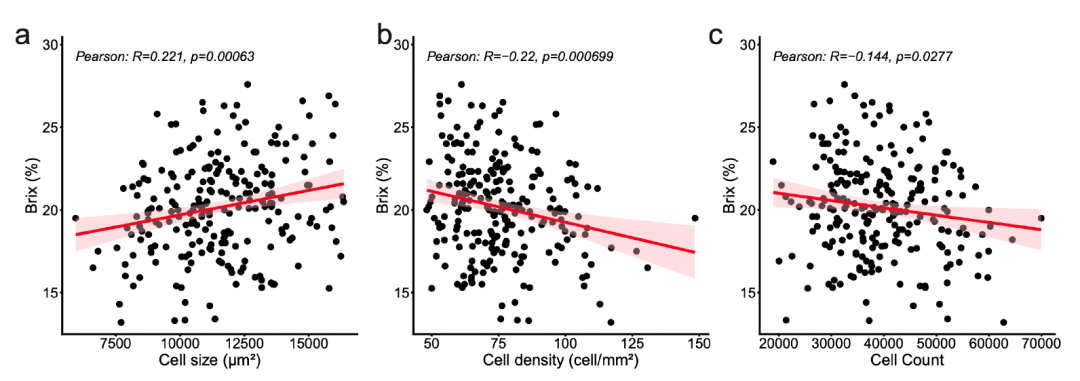
Figure 3. Correlation analysis between sugar content and parenchyma cell traits
The study revealed the unique "dosage effect" principle in polyploid crops, meaning that the copy number of favorable genes is not necessarily the more the better, but rather exists within an "optimal dosage window" that maintains physiological balance. Based on this discovery, the team identified a series of core superior haplotype variations, including SUS2 (sucrose synthase) and SUT2. These key gene loci can serve as efficient molecular markers, directly used for marker-assisted selection and assisted design breeding of new sugarcane varieties. This achievement indicates that using gene editing technology to precisely regulate the gene dosage of sub-genomes will overcome the limitations of traditional breeding, such as long cycles and high uncertainty, significantly accelerating the production of new sugarcane varieties with high yield, high sugar content, and strong stress resistance, providing an "accelerator" for the self-reliance and self-strengthening of China's sugar industry seed sector.
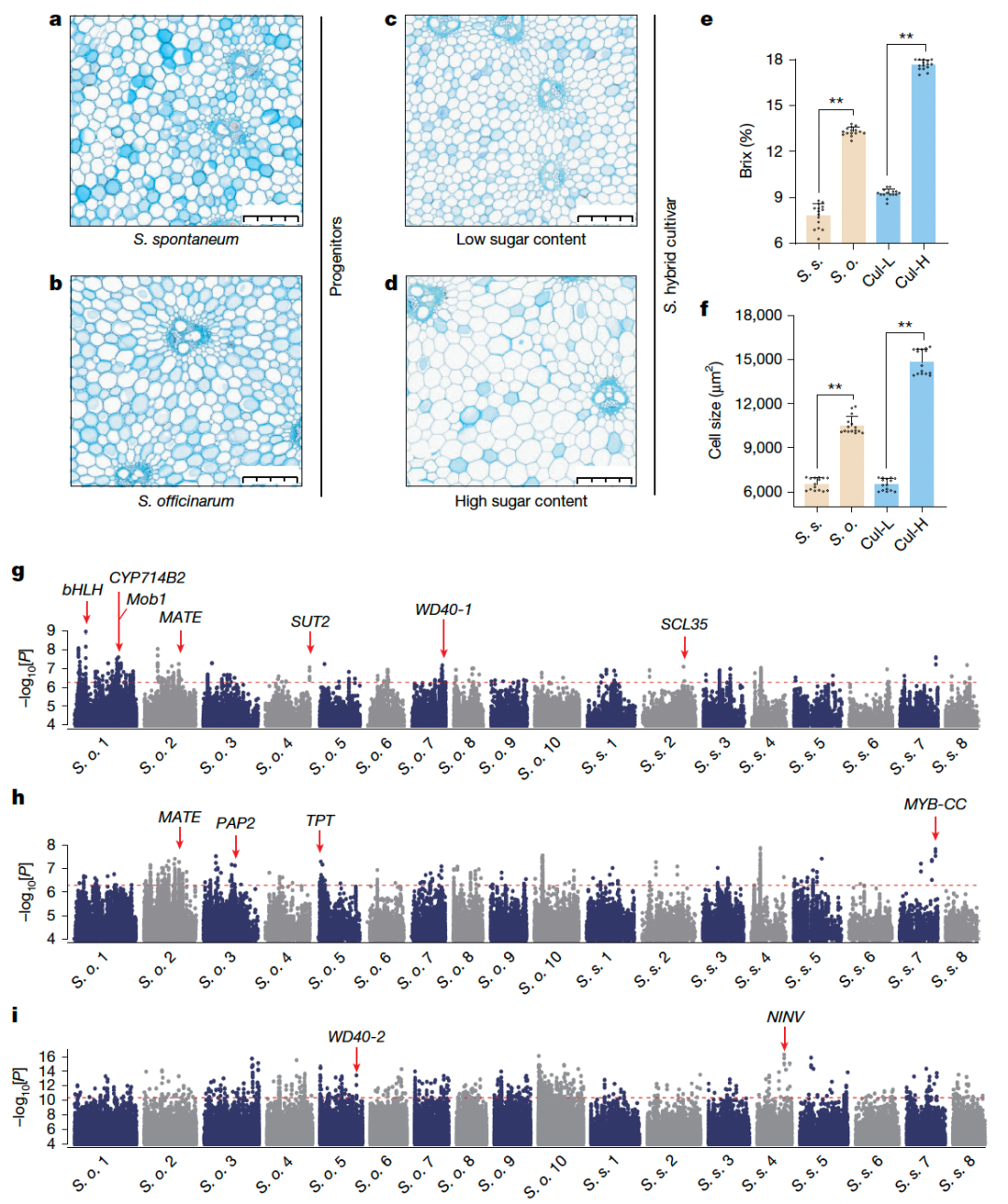
Figure 4. Genome-wide association study of parenchyma cell traits
Using innovative polyploid genomics as a framework, the research team systematically overcame three world-class technical bottlenecks in the field of polyploid genomics: assembly, association analysis, and quantitative evaluation, constructing for the first time a complete and high-precision whole-chromosome genetic map for modern cultivated sugarcane. From gene regulatory networks to cellular physiological morphology, this study reveals the genetic evolution mechanism of sugarcane as the "world's number one sugar-producing crop" across scales, providing a "Chinese solution" with demonstrative significance for global complex polyploid crop breeding. This is also the second high-quality paper in the field of sugarcane published by GXU in top CNS academic journals since January 2026.

 Address: No.100,East Daxue Road,Xixiangtang District,Nanning, Guangxi,China
 Postal Code: 530004
 Tel: 86-771-3238863
 Email: gjc@gxu.edu.cn